When You Stop Watching Someone: The Strange Grief of Cutting Off a Creator You Never Actually Knew
It Shouldn't Feel This Heavy, But It Does
You hit unfollow. Maybe it was slow — you'd been skipping their videos for a few weeks, muting their stories, scrolling past without stopping. Or maybe it was fast, one bad tweet and suddenly four years of loyalty evaporated in a single tap. Either way, you expected to feel nothing. Or at least, nothing much.
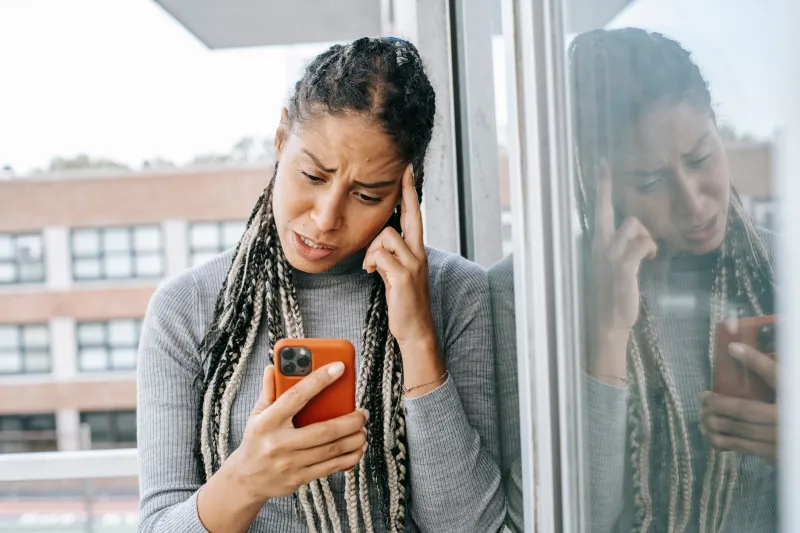
Instead, you feel weirdly hollow. A little guilty. Maybe even sad in a way that embarrasses you when you try to explain it out loud.
Here's the thing: that reaction isn't dramatic. It's not you being "too online." It's your brain doing exactly what it was built to do — and the internet just happens to be very good at exploiting that.
Your Brain Doesn't Know the Difference
Neuroscientists have been talking about parasocial relationships for decades, but the concept really started hitting mainstream conversation once YouTube and Instagram turned content creation into a full-time personality. The short version: your brain processes one-sided emotional bonds — the kind you form with creators, characters, even podcast hosts — using the same social circuitry it uses for actual relationships.
When you watch someone's daily vlogs, follow their life updates, laugh at their jokes, and feel genuinely invested in whether they're okay after a hard week, your neural pathways aren't tagging that as "parasocial." They're just registering familiarity, warmth, connection. The same stuff they'd register for a coworker you like or a friend you've had since college.
So when you remove that presence from your life — even voluntarily, even for totally valid reasons — the brain registers a loss. Not a massive one. But a real one.
Why It Hits Different Than Drifting From a Real Friend
Here's where it gets interesting. When you drift from an actual friend, there's usually a slow fade, a mutual withdrawal, a gradual lowering of the emotional temperature on both sides. The loss is real but it's also kind of shared. You both feel it. You both, in some small way, move on together.
With a creator? You're the only one who knows something ended. They have no idea you exist. They're still posting. Still going live. Still building a relationship with their audience — just not you anymore, because you opted out. And that asymmetry is weird in a way that's hard to sit with.
You grieve something that, from the other side, never registered as a relationship at all. There's no closure. No conversation. No "hey, I think we've grown apart" moment over coffee. You just quietly remove yourself from a dynamic the other party didn't even know you were in.
That's not nothing. That's a genuinely strange kind of loss to process.
The Algorithm Made It Worse — On Purpose
It would be incomplete to talk about this without naming the role platforms play in making parasocial bonds stickier than they naturally would be. Every major content platform — YouTube, TikTok, Instagram, Twitch — is designed to maximize your emotional investment in the creators you watch. Notification systems, algorithmic recommendations, comment section communities, and the parasocial language creators themselves use ("you guys are my family," "I couldn't do this without you") all serve to deepen the sense of genuine connection.
The platforms benefit when you feel like you know someone. That feeling keeps you coming back. It keeps you watching ads. It keeps you subscribed. So the grief you feel when you step away? Part of that grief was engineered. Not by the creator necessarily, but by the system they operate inside of.
That doesn't make your feelings fake. But it's worth understanding that you were, to some degree, set up to feel this way.
The Guilt Is the Weirdest Part
Ask anyone who's gone through a parasocial falling-out and the emotion that surprises them most isn't sadness — it's guilt. Which makes zero logical sense. You don't owe a stranger your attention. You're allowed to stop watching anyone at any time for any reason. The relationship was never reciprocal to begin with.
And yet. There's something that feels almost like betrayal. Like you're abandoning someone who trusted you, even though they never knew your name.
That guilt is probably a byproduct of how heavily creators lean into the language of community. "My subscribers are everything to me." "You guys are why I keep going." When someone frames their livelihood and wellbeing around their audience's loyalty, opting out of that audience can feel — irrationally — like you're pulling the rug out from under them.
You're not. Their subscriber count dropped by one. They will be fine. But your brain, having been fed the "we're in this together" narrative for years, has trouble fully computing that.
Are These Feelings Valid or Just... Manufactured?
Both, honestly. The feelings are valid in the sense that they're real, they're happening in your body, and they reflect genuine emotional investment you made over time. Dismissing them entirely as "parasocial brain rot" doesn't actually help you process them.
But they're also, in part, manufactured — amplified by design choices made by people whose job is to keep you emotionally tethered to content. Understanding that doesn't delete the feelings, but it does give you some useful distance from them.
You're allowed to feel a little sad about it. You're also allowed to recognize that the intensity of that sadness may not be entirely proportional to what the relationship actually was.
Moving On Without Making It Weird
The practical move here is pretty simple, even if it doesn't feel that way in the moment: give yourself permission to grieve it briefly and then let it go. You don't need to rationalize the unfollow to death. You don't need to write a mental essay justifying why you stopped watching someone's content.
You changed. Your interests shifted. Something happened that broke the spell. All of those are normal, valid reasons. Relationships — even one-sided digital ones — have natural lifespans.
The creator you unfollowed is still out there, still creating, still building something. You're just not part of that particular audience anymore. And somewhere out there, someone else just discovered their content for the first time and is falling in love with it the same way you once did.
That's kind of a nice thought, actually.
The grief is real. The guilt is understandable. And the fact that you felt something at all just means you were paying attention — which, for what it's worth, is more than most people do.