When One-Way Feels Like Two-Way: The Strange Psychology of Loving Someone Who Doesn't Know You Exist
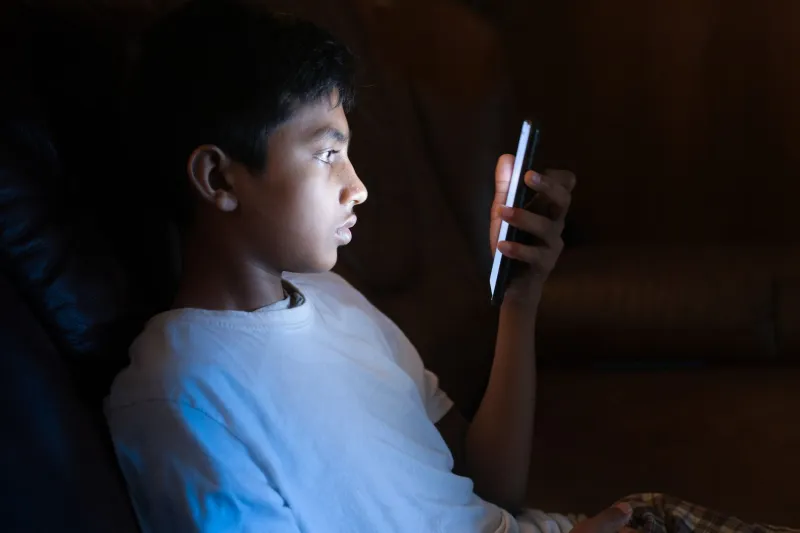
Let's just say it out loud: you have feelings for someone who doesn't know your name. Not romantic feelings necessarily — though sometimes, sure — but real feelings. The kind where you check in on them daily, worry when they go quiet, and feel a small but genuine spark of joy when they post. You've built an entire emotional relationship with this person. They've built nothing with you.
And yet somehow, it doesn't feel that way.
That gap — between what's real and what it feels like — is exactly what makes parasocial relationships one of the most fascinating and quietly devastating corners of modern fan culture. We're not just passive viewers anymore. We're emotionally invested participants in a connection that only exists on one side of the screen.
The Moment It Stops Feeling One-Sided
There's a specific inflection point where casual watching tips into something more personal, and it almost always happens through a very specific type of content. Not the polished stuff. Not the brand deals or the produced videos with clean lighting and a script. It's the other stuff — the 2 a.m. voice memo posted to Patreon, the unhinged Instagram Story, the YouTube vlog where they're clearly having a bad week and they just... talk about it.
That rawness triggers something in our brains that's hard to override. When someone shares vulnerability, we instinctively read it as intimacy. Evolutionary psychology has a lot to say about this — humans are wired to interpret disclosure as trust, and trust as the foundation of a bond. The problem is, that wiring doesn't come with a filter for "this person is talking to 400,000 people right now, not specifically to you."
When a creator says "you guys are the only ones who actually get me," your brain doesn't file that under mass communication. It files it under someone just told me something real. That's the trick, even when no trick is intended.
The Dopamine Loop Nobody Warned You About
Here's where it gets genuinely interesting — and a little uncomfortable.
Every time a creator you follow posts something that lands for you, your brain releases a small hit of dopamine. That's not a metaphor, that's just neuroscience. You get the same chemical reward you'd get from a text back from a friend, a laugh shared with someone you care about, a moment of recognition from another human being. Your brain doesn't particularly care that the exchange was asymmetrical. It got what it needed.
And then they post again. And again. And the loop deepens.
Over time, you accumulate a history with this person — their old videos, their early work, the era before they blew up. You watched them figure things out. You were there for it. That longitudinal experience creates something that feels almost indistinguishable from a real relationship. You have context. You have inside jokes. You have opinions about their decisions.
The only missing ingredient is mutuality. And somehow, that feels like a technicality.
The Formats That Make It Worse (In the Best Way)
Not all content hits the parasocial nerve equally. Some formats are basically purpose-built to collapse the distance between creator and audience:
Podcasts are probably the most potent. Hours of uninterrupted conversation, often casual and wandering, listened to through earbuds while you're commuting or cooking or lying in the dark. The audio intimacy is real — voices in your ears feel different than voices on a screen. Regular podcast listeners often describe their hosts like old friends, and that's not an accident.
Day-in-the-life vlogs create the illusion of shared routine. You wake up with them. You watch them make coffee. You see the apartment. You know the dog's name. This is cohabitation-adjacent content, and it registers accordingly.
Comment replies and community posts are the nuclear option. The moment a creator responds to your comment — even generically, even with just an emoji — the relationship upgrades in your head. You made contact. You exist to them, at least for a second. That second can carry a lot of weight.
What Happens When the Illusion Cracks
Most people who've been deep in a parasocial attachment can point to the exact moment it shifted. Sometimes it's a creator doing something that feels out of character — a bad take, a disappointing response to controversy, a pivot that seems calculated in a way their old content never did. Sometimes it's more mundane: they get bigger, the community gets louder, and suddenly the thing that felt personal feels like a product.
Other times, it's just a random moment of clarity. You're watching a livestream and someone asks them a question you've thought about a hundred times, and they answer it in a way that makes you realize: they don't actually know what I thought they knew about me. They don't know me at all.
That realization can hit harder than it probably should. And that's not a character flaw — it's just what happens when you've been emotionally investing in something without a clear accounting of what you were actually investing in.
The grief that follows isn't dramatic, usually. It's more like a quiet recalibration. A gentle deflation. You still like them, maybe. But something has reset.
So What Do We Do With All of This?
Honestly? There's no clean resolution here. Parasocial relationships aren't inherently bad. They fill real gaps — community, entertainment, the sense of being understood by someone who articulates things you've never been able to put into words. For a lot of people, especially those who are isolated or going through hard seasons, they provide genuine comfort. That's worth something.
But there's a version of this that costs you more than it gives back. When the emotional labor you're putting into following someone starts to outpace what you're getting out of it — when you feel anxious about their silence, hurt by their choices, or genuinely let down by someone who never agreed to anything — that's the moment to zoom out.
The relationship was always real on your end. The feelings were never fake. What wasn't real was the reciprocity — and knowing the difference is probably the most important piece of media literacy nobody teaches you.
Your favorite creator might be great. They might even be genuinely good. But they're not your friend. And weirdly, once you really accept that, you can often enjoy them a whole lot more.