So You Started Selling Your Obsession — Now What? The Hidden Cost of Turning a Passion Into a Product
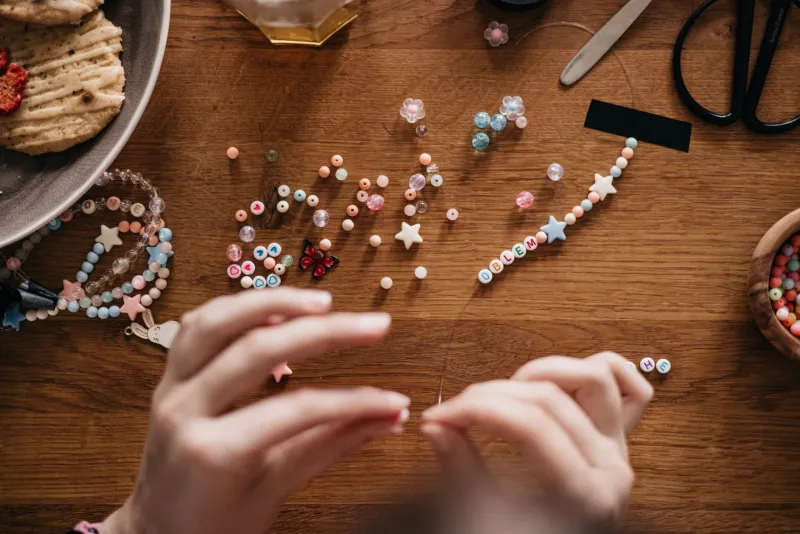
It starts innocently enough. You've been deep in your niche for years — maybe it's a mid-2000s anime that never got a proper Western release, a hyper-specific era of professional wrestling, or a fantasy book series with like forty thousand readers worldwide. You make stuff for fun. Fan art, custom pins, hand-sewn plushies, a little Carrd shrine. Someone in the Discord says, hey, have you ever thought about selling these?
And then, almost before you realize it, you've got an Etsy shop, a Patreon tier system, and a production schedule that is somehow now a second job.
This is the weird economy of niche fandom monetization. And it's a lot more emotionally complicated than it sounds.
The Jump from Fan to Seller Is Faster Than Ever
The infrastructure for this kind of thing didn't really exist at scale ten years ago. Now it's everywhere. Etsy, Patreon, Ko-fi, Gumroad, Threadless, TeePublic — there are entire platforms built around the idea that your specific, personal obsession might have a small but real audience willing to pay for it. And they're not wrong. Niche communities are loyal. They want merch for the thing that has no official merch. They want someone to acknowledge that their corner of fandom exists.
So creators step in. And at first, it feels incredible. You're making money doing the thing you love. You're connecting with people who get it. The validation is real and it hits different when it's coming from your actual community rather than an algorithm.
But then the orders come in. The Patreon subscribers expect a new piece every month. The Etsy shop needs restocking. And somewhere along the way, the thing you made because it brought you joy starts to feel like a deadline.
When the Schedule Swallows the Spark
This is the part nobody talks about enough. There's a specific kind of burnout that comes from monetizing something you once did purely for yourself — and it's different from regular work burnout because it carries this extra layer of guilt. You're supposed to love this. This is the thing you chose. How can you be tired of it?
Creators in fandom spaces describe it in weirdly similar ways. The moment they started treating their passion like a business, they started experiencing it like one. The obsessive joy of staying up until 2 a.m. because you wanted to finish a piece gets replaced by staying up until 2 a.m. because you have to ship it. Same action, completely different emotional texture.
There's also the pressure of audience expectations. When people are paying you — even small amounts, even just a few dollars a month on Ko-fi — there's an implicit contract. You owe them something. And for people who got into fandom creation as a form of escape, that obligation can feel suffocating in a way that's hard to explain to anyone outside of it.
The Identity Problem Nobody Prepared You For
Here's the part that gets really weird: what happens to your relationship with the source material?
If you're making fan content for a specific show, game, or book series, you are now professionally invested in that property in a way you weren't before. When the show takes a turn you hate, it's not just a bummer — it's a potential business problem. Do your customers still want this content? Should you pivot? Is it worth making the piece you actually want to make, or the one that's going to sell?
Some creators describe a kind of protective detachment that sets in. They stop engaging with the fandom the way they used to — no more speculation threads, no more live-tweeting episodes — because they can't afford to let their personal feelings contaminate their product output. The thing they loved becomes a brand to manage.
Others go the opposite direction and over-identify. Their entire online persona becomes the niche, the shop, the content. And when they inevitably need a break, or the fandom shifts, or the source material ends, they're not just losing a hobby — they're losing a business and an identity at the same time.
It's Not All Bad, Though — Let's Be Real
None of this is to say that monetizing your passion is inherently a mistake. Plenty of people navigate it really well. The key seems to be intentionality — knowing why you're doing it and being honest with yourself about what you're willing to trade.
The creators who seem to handle it best tend to keep some part of the obsession ringfenced. A sketchbook that never gets posted. A fan fic that's just for them. A corner of the hobby that isn't for sale and isn't for anyone else. They treat that private space like a resource that needs protecting, because it's what feeds everything else.
There's also something to be said for community. Niche fandoms are small by definition, and when you're selling within one, you're often selling to people who are also your friends, your mutuals, your Discord regulars. That can create a really different dynamic than traditional commerce — more grace, more understanding when life gets in the way, more genuine connection around the work.
But it can also make boundaries harder to set. It's easier to tell a stranger you're taking a break than to tell the person who's been in your server since 2019 that you're burnt out and need to close the shop for a month.
So What Do You Actually Do With This?
Honestly? There's no clean answer. The economics of niche content creation are real — people are making genuine money, building real communities, and filling gaps that corporate IP holders would never bother with. That's valuable. That matters.
But the emotional math is also real. Every hour your passion spends being a product is an hour it's not being an escape. And for a lot of people, especially in a world that already demands a lot from them, that escape isn't a luxury. It's load-bearing.
If you're thinking about making the jump from fan to seller, maybe the most useful thing anyone can tell you is this: figure out what you need the hobby to be for you before you figure out what you need it to do for you. Because once you flip the switch, it's genuinely hard to flip it back.
And if you've already flipped it and you're reading this at 1 a.m. trying to finish a commission you no longer care about — hey. You're not alone. That's a real thing that's happening to a lot of people, and it deserves to be talked about more than it is.